
Guarantees & surety
Customs & Excise Guarantee
Comprehensive guarantee securing deferred duty, VAT and excise to Revenue or HMRC, so that goods can move under duty suspension without lodging cash.
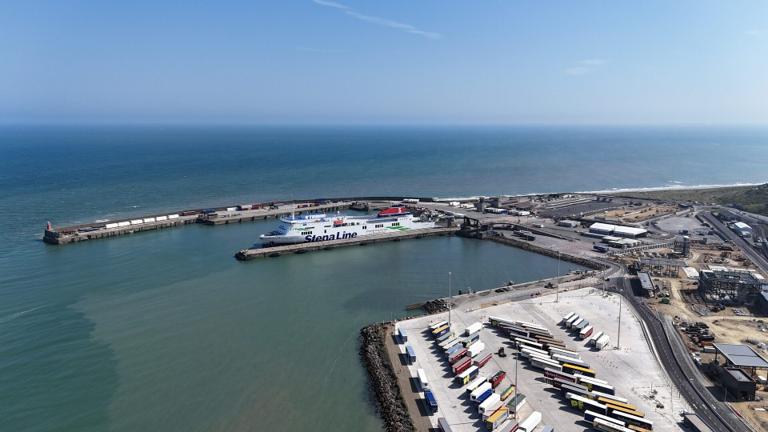
Boland’s Quay, Dublin · William Murphy, CC BY-SA 2.0
Who it is for
Importers, hauliers, customs agents and bonded warehouse operators
What it does
- Comprehensive guarantee for deferment accounts
- Transit and temporary storage guarantees
- Issued to Revenue (Ireland) and HMRC (United Kingdom) standard forms
- Duty deferment limits reviewed annually against trade volumes
The product in full
Moving goods under duty suspension is a privilege that comes with a condition: the authority wants security for the duty, VAT and excise it has not yet collected. A trader can lodge cash, or it can lodge a comprehensive guarantee from an insurer. The guarantee is the cheaper answer for anyone whose deferment limit is measurable, because cash lodged with Revenue or HMRC earns nothing and cannot be used.
These are the lowest-rated instruments we write, for two reasons. The beneficiary is a tax authority using its own standard form, so there is no wording risk; and the exposure is a duty liability that is quantified monthly rather than an open-ended performance obligation. What we are underwriting is the trader’s ability to pay a bill it has already incurred.
The limit is the number that needs attention. It is set against declared volumes and reviewed annually, and a business whose imports have grown will find the guarantee constrains its own customs clearance before anyone else notices. We review limits with the trader rather than waiting for the authority to raise it.
Literature
Product literature is issued to appointed intermediaries. Ask your underwriter, or request it through the enquiry form.
- Customs guarantee wordingOn request
- Deferment limit calculation sheetOn request
How it works
What happens, in order
From the first enquiry to the point the cover, the contract or the facility is in place.
The authority sets the deferment limit
Revenue or HMRC assesses the security required against the duty, VAT and excise the trader defers in a month, with the usual headroom.
We issue on the authority’s standard form
Comprehensive guarantees for deferment accounts, and transit or temporary storage guarantees where goods move under suspension. The forms are not negotiated.
Goods move; duty is deferred
The trader clears goods against the deferment account and settles on the authority’s cycle. The guarantee stands behind that settlement.
The limit is reviewed annually
Against declared volumes. A growing importer needs the limit raised before the guarantee becomes the constraint on clearance.
The numbers
A worked example
Illustrative arithmetic, so the shape of the product is visible rather than described. Nothing here is a quotation or a projection.
A £750,000 deferment guarantee
A customs agent clearing for several importers defers around £600,000 of duty and VAT a month. HMRC sets the security at £750,000 on a comprehensive guarantee, written on the authority’s standard form and reviewed annually.
The applicant is in band 2, and the guarantee is written unsecured against an approved surety facility.
- Bond value
- £750,000
- Term
- 12 months
- Indicative premium rate
- 0.81% p.a.
- Premium for the term
- £6,075
- Issuance and arrangement fee
- £450
- Total indicative cost
- £6,525
- Cost as a share of bond value
- 0.87% of bond value
How the rate is built
- Base rate — Customs & Excise Guarantee0.85% p.a.
- Financial strength — Band 2 — strong and consistently profitable−5%
- Security — Unsecured, against an approved surety facilityNo adjustment
- Wording — Conditional — default must be establishedNo adjustment
- Beneficiary — Irish or UK public body, Revenue or HMRCNo adjustment
- Term — Up to 12 monthsNo adjustment
The alternative is £750,000 of cash lodged with the authority, earning nothing and unavailable to the business. The premium is the annual cost of not doing that.
What collateral does to the rate
The same £750,000 guarantee, priced across the security structures we write it against.
View these figures as a table
| Value | |
|---|---|
| Unsecured — Unsecured, against an approved surety facility | 0.85% |
| Counter-indemnity — Parent or director counter-indemnity | 0.76% |
| 25% cash — 25% cash collateral | 0.70% |
| 50% cash — 50% cash collateral | 0.70% |
| 100% cash — Fully cash collateralised | 0.70% |
Suitability
Where the Customs & Excise Guarantee fits
The cases it answers, the cases it does not, and what an underwriter needs before quoting.
It is the right answer when
- The trader defers duty, VAT or excise and would otherwise lodge cash.
- Goods move under transit or into a bonded warehouse.
- A customs agent needs security in place for clients’ clearances.
Look at something else when
- The trader has no deferment authorisation; that comes from the authority first.
- The exposure is a commercial debt to a supplier rather than a duty liability.
What we need to quote
- 1.The deferment account details and the limit the authority requires.
- 2.Twelve months of declared import volumes, and the duty and VAT deferred.
- 3.Accounts and current management figures.


Questions
What brokers ask us about this product
Which authorities do you issue to?
The Revenue Commissioners in Ireland and HM Revenue & Customs in the United Kingdom, on their own standard forms.
What if our volumes grow mid-year?
The limit can be increased by endorsement rather than replaced. Tell us before the authority does — a guarantee that has run out of headroom stops clearances.
Is this an evergreen guarantee?
In practice yes: it stays in force while the deferment authorisation does, with the limit reviewed each year. The premium for the agreed term is paid in full when the guarantee is issued, and an increase or a further term is priced and paid the same way.
Request information
Ask us about the Customs & Excise Guarantee
The form reaches an underwriter in Dublin. If you are an intermediary, say so and we will route it to the broker desk.