
Brochure
Caución and crédito in Spain, on an insurer’s own paper
An Irish credit and suretyship insurer, authorised since 2001 and entered on the DGSFP register for ramos 14 and 15: guarantees admitted before the contracting authority, the tax authority and the counterparty, without spending the bank line that funds the work.
DGSFP authorisation code: clave L1617 — on the register since 19 July 2026
For brokers, contractors, developers and finance directors in Spain.
Puente de la Constitución de 1812, Cádiz · Diego Delso, CC BY-SA 4.0
Who we are
A specialist, not a generalist
FDI Insurance d.a.c. is a specialist credit and suretyship insurer: an independent non-life undertaking in Dublin that issues guarantees and credit cover on its own paper and its own capital, through brokers.
01
Specialist, not general
One Solvency II line of business, credit and suretyship, read by underwriters who do nothing else. A specialist book is the only way a guarantee gets priced properly rather than declined slowly.
02
An insurer, not a bank
A guarantee is issued on our balance sheet, so it sits outside the client’s committed banking facilities instead of consuming them.
03
Our own capital, our own paper
The company holds its own authorisation, the risk stays on its own balance sheet, and profits have been retained rather than distributed — which is why eligible own funds have risen every year since 2019.
04
Broker-only distribution
We do not sell direct. In Spain, Italy and Romania, distribution and day-to-day administration sit with our associated managing general agent.
05
Published in full
Every filed Solvency and Financial Condition Report since 2019 is on our website in full, with the capital target the Board set for each period.
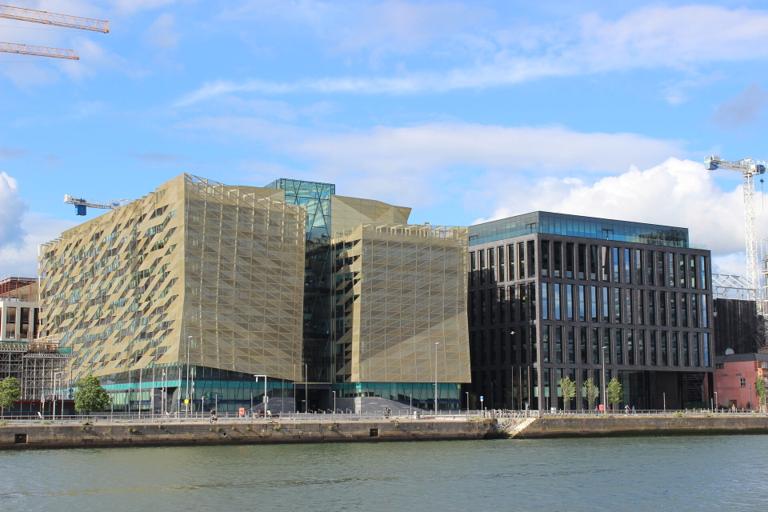
Identification
- Legal name
- FDI Insurance Designated Activity Company (FDI Insurance d.a.c.)
- Legal form
- Private company limited by shares, qualified as a Designated Activity Company under the Irish Companies Act 2014
- Incorporated
- 5 June 2001
- Authorised
- 5 July 2001 · Central Bank of Ireland, classes 13, 14
- Registered office
- Elm Park, Merrion Road, Dublin 4, Ireland
- Registered number
- 344028
- Central Bank of Ireland reference
- C33629
- LEI
- 6354004DCXXTSLKWUZ20
- Auditor
- PricewaterhouseCoopers, Dublin
- SCR method
- Standard formula, with no matching or volatility adjustment and no transitional measures
Why an insurer
The same security for the beneficiary. A different balance sheet for the client.
For the beneficiary, a seguro de caución does the same job as a bank aval: whoever holds a certificado de seguro de caución holds an undertaking to pay from a supervised institution. For the company that buys it the two are not the same at all.
An aval is a bank exposure, reported as one, and it consumes the limit the same bank would otherwise lend against — often with cash pledged behind it. A seguro de caución is paid as a premium and sits outside the banking relationship. The credit line that was going to fund plant, materials and payroll is still there when the award lands.
Where Spanish law admits it
Ley 9/2017, de Contratos del Sector Público
Lists the seguro de caución beside cash, securities and the aval as a form in which the garantía provisional and the garantía definitiva may be lodged — on one condition: the insurer must be authorised in the ramo.
Ley General Tributaria
Admits a certificado de seguro de caución as security for an aplazamiento or fraccionamiento of tax debt.
Caja General de Depósitos
Accepts it as a form of guarantee in its own right, including the security a renewables developer lodges for grid access and connection.
Our ramo 15 entry is what meets that condition, and it is the first thing a beneficiary checks.
The figures we publish
A guarantee is worth what the balance sheet behind it is worth
A contracting authority, a tax authority or a counterparty accepting our guarantee is accepting our capital. So we publish it, every year, in full.
163%
SCR cover ratio
Board target for 2024: 163%
£16,207k
Eligible own funds (SCR)
2024
484%
MCR cover ratio
Absolute euro floor for the class
7
Years of published capital
Filed reports, 2019 to 2024, hosted in full
Own funds against the requirement, 2019 to 2025
SCR cover ratio, 2019 to 2025
| Item | Value |
|---|---|
| Total assets | £18,400k |
| Eligible own funds (SCR) | £16,207k |
| Solvency Capital Requirement (SCR) | £9,956k |
| SCR cover ratio | 162.8% |
| Minimum Capital Requirement (MCR) | £3,317k |
| MCR cover ratio | 484.2% |
| Gross premiums written | £1,397k |
The balance sheet is simple on purpose: assets sit in deposits and receivables, not structured credit, so the solvency valuation needs no bespoke models or adjustments. The Minimum Capital Requirement is the absolute euro floor for the class of business rather than anything the book itself generates.
The six filed reports, 2019 to 2024, can be downloaded in full at https://fdi-insurance.eu/solvency.
Our entry in Spain
On the DGSFP register since 19 July 2026
Entered on the administrative register of insurance and reinsurance undertakings under the freedom to provide services, on notification of the passport by the Central Bank of Ireland.
- Clave
- L1617
- Denominación
- FDI Insurance Designated Activity Company
- País de origen
- Irlanda
- Situación
- Activa
- Fecha de autorización
- 19 July 2026
- Régimen
- Freedom to provide services (libre prestación de servicios)
- Home supervisor
- Central Bank of Ireland · C33629
Ramos
- 14 · CréditoActivo
Ramo completo · alta 19 July 2026
Cover on the money a business is owed: one buyer, a group of buyers, or the whole ledger.
- 15 · CauciónActivo
Ramo completo · alta 19 July 2026
Guarantees issued in the client’s place — to a contracting authority, a tax authority, a counterparty or a public body.
A second public record: we appear on the Banco de España’s list of insurance corporations in Ireland, under European code IEC33629, as a non-life insurer. It is the same reference the DGSFP entry carries.
Operating in a host state does not widen an authorisation: ramo 15, caución, is how the Spanish register itemises cover the Irish register grants inside class 14. Prudential supervision stays in Dublin; the rules that protect the tomador and the asegurado in the contract are Spain’s, and a client or a beneficiary keeps every remedy Spanish law gives them.
Where we want to operate
Three markets, and what we issue into them
Public works, energy and renewables, and liabilities to the tax authority. In each of them the security is compulsory, the form is prescribed, and the wrong instrument costs a business the facility that funds its work.
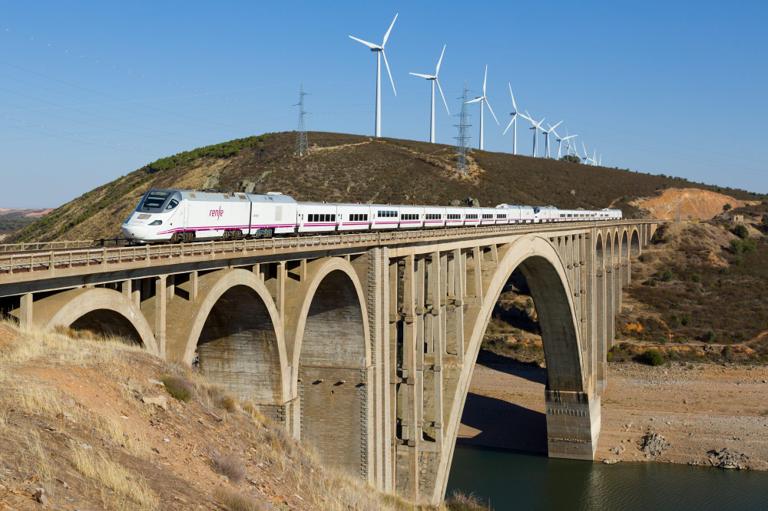
01 · Public works
Alongside the companies that build the country
Contratación pública is where a caución earns its place: the security is compulsory, the form is prescribed, and the alternative consumes the bank facility that funds the contract.
We want to be the insurer a Spanish contractor and its broker turn to when an award is coming — not once the deadline for lodging the garantía definitiva has already been set. Tell us about the year rather than the tender: a facility sized against one set of accounts and one counter-indemnity turns each subsequent guarantee into a phone call. We read the wording the contracting authority requires before we issue, and we say what we will and will not sign.
What we issue
- Garantía provisional, where the tender calls for one
- Garantía definitiva, for the life of the contract and its guarantee period
- Anticipos — advance payment guarantees released against delivery, not against the contract as a whole
- Retenciones, so retention money stays in the business rather than in the employer’s account
- Guarantees lodged with the Caja General de Depósitos or the corresponding regional treasury
- UTE and joint-venture structures, with the counter-indemnity taken from the entity that holds the assets
For whom: Constructoras, industrial and civil contractors, UTEs and their brokers
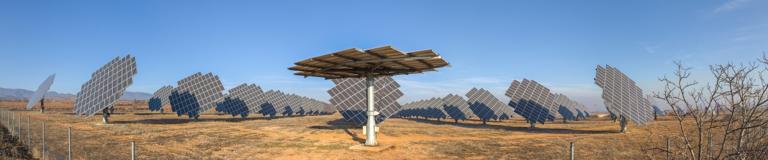
02 · Energy and renewables
From grid access to the end of the guarantee period
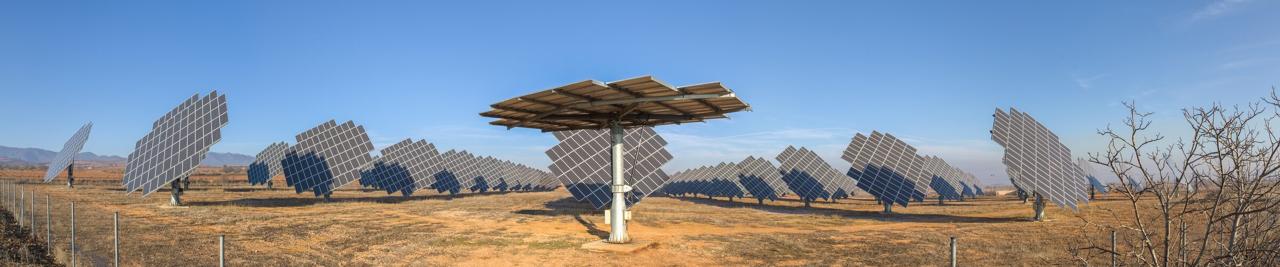
A renewables project posts security long before it earns anything: to secure access and connection, to satisfy the administration granting the permit, and to the offtaker and the EPC contractor once construction starts.
This is guarantee demand that arrives in a sequence, and the sequence is the opportunity. A developer that has to find security at the access stage, again at construction, and again on dismantling obligations does not want three separate conversations with three separate underwriters. We would rather look at the project once, understand the pipeline behind it, and set a facility that follows it through — solar, wind, storage, grid connection and the industrial works around them.
What we issue
- Guarantees securing access and connection to the network
- Security to the granting administration on permits and authorisations
- Performance and advance payment guarantees on EPC and supply contracts
- Obligations on decommissioning, dismantling and site restoration
- Credit cover on offtake and supply receivables where the counterparty is corporate
For whom: Developers, IPPs, EPC contractors and equipment suppliers
03 · Tax and public liabilities
A deferral the tax authority accepts, without the bank
A business negotiating an aplazamiento or fraccionamiento of a tax debt has to secure it. A certificado de seguro de caución is an admitted way to do that — and it does not sit on the bank facility.
This is the point in a company’s year where security is hardest to find and matters most: the debt is agreed, the instalments are agreed, and the guarantee is the only thing standing between the two. We treat it as an underwriting question rather than a form-filling one — we look at the trading, the reason for the deferral and the plan behind it, and where we can support it we issue the certificate the authority requires. We would rather be beside a solvent business through a difficult quarter than meet it afterwards.
What we issue
- Certificado de seguro de caución securing an aplazamiento or fraccionamiento of tax debt
- Security for liabilities to other public administrations where a caución is admitted
- Guarantees supporting suspension of enforcement while a matter is under review
- Instalment structures matched to the schedule actually agreed with the authority
For whom: Trading companies and their brokers
How we work
What we need to issue, and what happens after
01
The counter-indemnity
Every guarantee is written against a counter-indemnity from the company whose obligation is secured and, where the accounts call for it, from its parent — that is what gives the right of recovery in article 68 its effect.
02
The file
The last audited accounts and the current management figures, the contract or resolution the security is for, and the exact wording the beneficiary requires. Where a model is prescribed — Caja General de Depósitos, a regional treasury, a tax office — we issue on that form, in Spanish.
03
The facility
A company that expects several guarantees in a year should ask for a facility rather than a bond: one set of accounts, one counter-indemnity, and each subsequent certificate becomes a phone call.
04
The release
A garantía definitiva is released against the acta de recepción and the authority’s cancelación; an advance payment guarantee reduces as the advance is recovered; a tax certificate lapses with the last instalment. Releases are administered in Spain, in Spanish, and they are capacity for the next award.
Published indicative rates
| Instrument | From |
|---|---|
| Performance Bond | 1.05% |
| Seguro de Caución | 1.05% |
| Renewable Energy Surety | 1.20% |
| Advance Payment Guarantee | 1.20% |
| Bid & Tender Bond | 1.35% |
| Retention Bond | 0.95% |
| Customs & Excise Guarantee | 0.85% |
| Financial Guarantee | 1.50% |
| Rent Deposit Guarantee | 1.30% |
| Environmental Restoration Bond | 1.15% |
Per cent of the guaranteed amount, per annum, before loadings. The final rate depends on the applicant’s balance sheet, the wording, the term and the counter-indemnity; amounts above €5,000,000 are written on referral. Indicative, not an offer of cover.
Five-year scenario
What a specialist book in Spain looks like at five years
An illustration of the premium volume a small specialist insurer typically builds in a new market under the freedom to provide services, through one distribution agreement: modest in the first full year, compounding as each broker relationship brings its second and third client, and flattening as the book reaches the size one agency can administer.
€4.5m
Premium in year 2031
Gross written premium by market, euro millions
€12.3m
Cumulative premium over five years
Scenario
€388m
Guaranteed exposure at year five
Guaranteed exposure implied by the premium, euro millions
Gross written premium by market, euro millions
Guaranteed exposure implied by the premium, euro millions
Market mix at year five
What the scenario assumes
- One distribution agreement: the associated managing general agent places and administers the book, and every risk is underwritten in Dublin.
- Facilities rather than single bonds: a client is written once, against one set of accounts and one counter-indemnity, and each subsequent guarantee draws on the facility.
- Public works leads, because the security is compulsory and recurs with every award; energy grows fastest, because a project posts guarantees in sequence; tax certificates are the smallest and steadiest of the three.
- The whole premium for the term is paid on issue, as the published payment terms state, so premium and exposure move together.
| Year | Public works | Energy and renewables | Tax and public liabilities | Premium | Cumulative premium | Exposure |
|---|---|---|---|---|---|---|
| 2027 | 0.4 | 0.2 | 0.1 | 0.6 | 0.6 | 52 |
| 2028 | 0.8 | 0.4 | 0.3 | 1.4 | 2.0 | 121 |
| 2029 | 1.2 | 0.8 | 0.4 | 2.4 | 4.4 | 207 |
| 2030 | 1.7 | 1.2 | 0.6 | 3.4 | 7.8 | 293 |
| 2031 | 2.1 | 1.7 | 0.8 | 4.5 | 12.3 | 388 |
Illustrative scenario, not a forecast of results, not a Board target and not a figure from any filed report. Gross written premium in euro millions, by calendar year, for the Spanish book only; the guaranteed exposure is derived from the premium at the simple mean of the base rates published on this site (1.16% per annum). Actual volumes depend on the terms of business issued, the facilities set and the tenders awarded.
How business reaches us
One agency for Spain, Italy and Romania. One insurer behind it.
Distribution and day-to-day management sit with our associated managing general agent, which we have worked with for years: local placement, local language and local administration. Underwriting authority, pricing, the policy, the capital and the claims stay with FDI Insurance.
A broker who wants to place credit or caución business in Spain starts with the broker desk in Dublin. We introduce you to the agency that handles your market, and terms of business follow from there.
- Broker desk
- [email protected] · +353 1 604 4020
- General enquiries
- [email protected] · +353 1 604 4000
- Hours
- Monday to Friday, 09:00–17:00 (IST)
- Website
- https://fdi-insurance.eu/spain
This brochure is a page of our website, so every figure on it is the one the site publishes. The address in Spanish is https://fdi-insurance.eu/es/spain-brochure.
FDI Insurance d.a.c. is an Irish insurance undertaking authorised and prudentially supervised by the Central Bank of Ireland, operating in Spain under the freedom to provide services and entered as such on the DGSFP register. Cover is arranged through regulated intermediaries, and nothing in this brochure is an offer of cover or a commitment to issue a guarantee. Figures in sterling are taken from the reports filed with the Central Bank of Ireland; the 2025 figures are provisional, and the five-year scenario is an illustration rather than a forecast.